The alternative for CSRD
Simplified sustainability reporting based on the Voluntary Sustainability Reporting Standard (VS)

Sustainable progress amidst changing regulations
The environment in which organisations operate is evolving rapidly. Until recently, tens of thousands of companies in Europe were preparing for the detailed reporting requirements of the Corporate Sustainability Reporting Directive (CSRD). The recent EU Omnibus package, however, marks a fundamental shift. A substantial part – possibly including your organisation – are no longer required to comply with the CSRD. While this may initially seem like a relief from regulatory pressure, stakeholders’ expectations for transparency regarding your sustainability performance continue to rise.
Stakeholders – ranging from investors and customers to employees and governments – are increasingly making their decisions based on the environmental, social, and governance (ESG) performance of organisations. Transparency about sustainability is no longer just a matter of compliance, but an essential condition for long-term resilience.


Especially now, in a time of geopolitical volatility and uncertainty due to changing regulations, it's important to stay the course. The EU is committed to a competitive and sustainable economy, with less regulatory pressure that goes hand in hand with promoting transparency and sustainable business practices. For organisations that fall outside the CSRD scope due to the Omnibus package, this doesn't mean that sustainability reporting becomes less relevant. On the contrary, many companies are looking for a pragmatic way to communicate their sustainability efforts to stakeholders.
Simplified sustainability reporting based on the Voluntary Sustainability Reporting Standard (VS) provides a practical solution. This standard enables organisations to achieve transparency about their sustainability performance in an accessible and proportionate manner, without the complexity and costs associated with full CSRD compliance. This way, your organisation remains in control, meets the expectations of your stakeholders, and contributes to sustainable progress – even amid changing regulations.
The VS as an alternative for non-CSRD obligated organisations
- Prepare for ESG-related data requests from large organisations within your value chain. Reporting according to the VS can also address the data needs of banks, investors, and other stakeholders.
- Navigate the complex and evolving landscape of sustainability regulations, while staying aligned with EU policies on sustainability and competitiveness.
- Improve your access to financing with simplified sustainability reporting under the VS. Transparency on key sustainability topics creates opportunities for differentiation and demonstrates how your organisation aligns with the sustainability goals of potential investors.
- It also acts as a catalyst for innovation and helps future-proofing your business. This approach enables timely identification of new opportunities while maintaining control over sustainability-related risks.
The VS: why, what, and its relation to CSRD
The standard is intended to serve as a 'protective shield' for companies that are not obligated to comply with the CSRD. The information that large companies must obtain from partners in the value chain as a result of CSRD compliance is maximized with this new voluntary standard. The VS thus offers a reporting standard for simplified sustainability reporting, ensuring that the information needs of stakeholders are sufficiently met.
What does this standard look like and how does it relate to the CSRD?

What is the VS?
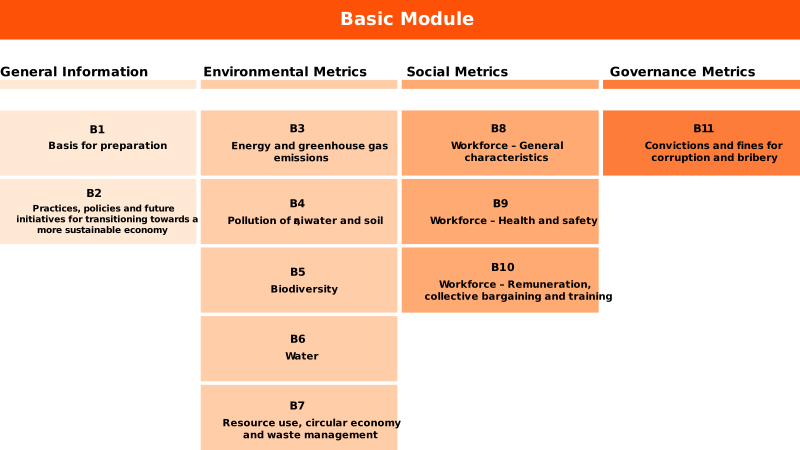
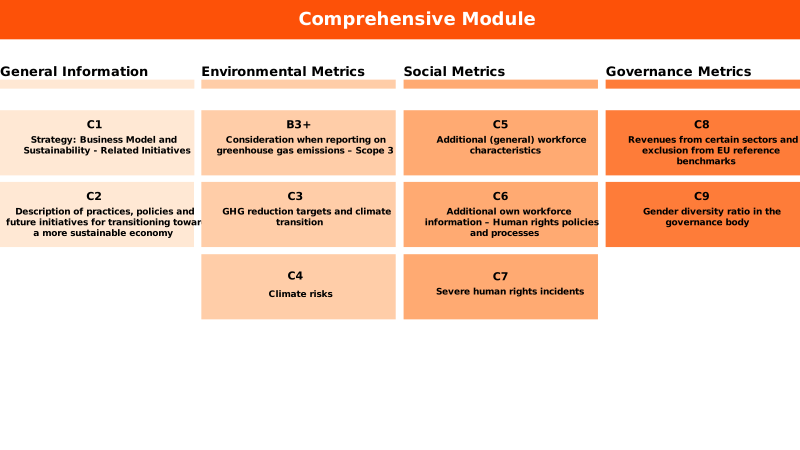
The VS standard consists of two modules: the Basic Module and the Comprehensive Module. The Basic Module includes eleven reporting requirements, covering general sustainability policies and initiatives, along with ESG-related metrics. The Comprehensive Module builds on the Basic Module with nine additional reporting requirements, offering deeper insights and more detailed data points. This module is tailored to the information needs of stakeholders such as banks, investors, and B2B customers. Both modules can be tailored with entity- or sector-specific sustainability topics, ensuring the reporting remains relevant and meaningful for your organisation and its stakeholders.
The Basic Module is the targeted approach for micro-enterprises and is a minimum requirement for other enterprises.
The Comprehensive Module defines additional data points that are likely to be requested by banks, investors, and business customers, supplementing the information provided in the Basic Module.
Undertakings with 10 or fewer employees benefit from additional proportionality, with exemptions from certain environmental and workforce disclosures and simplified requirements for others.
How VS relates to the CSRD
Simplified sustainability reporting based on the VS is positioned as 'the alternative' for organizations that fall outside the mandatory application of the CSRD (whether due to the Omnibus or not). While the standards share substantive similarities, there are also some key differences that set them apart.

Navigating towards sustainable value creation with the right choices
The recent developments around the CSRD and the introduction of the VS standard call for clear choices, while transparency on sustainability remains a prerequisite for success.
In this dynamic context, we advise organisations that fall outside the scope of the CSRD (or have never been in scope): Don’t wait—start with proportionate ESG reporting based on the VS standard. This approach allows you to meet the growing information needs of investors, banks, and partners in the value chain, while building trust and future resilience without unnecessary complexity.
With these no-regret moves, your organisation remains in control, agile, and attractive to stakeholders. PwC is ready to support you in making the right choices and achieving sustainable value creation, so you can approach the future without unnecessary complexity.

Contact our professionals
Send us an enquiry
Subscribe to our newsletter
Always up-to-date information
Stefan Milenkov
Senior Manager, Capital Markets and Accounting Advisory Services, PwC Bulgaria
+359 894 33 29 40


